







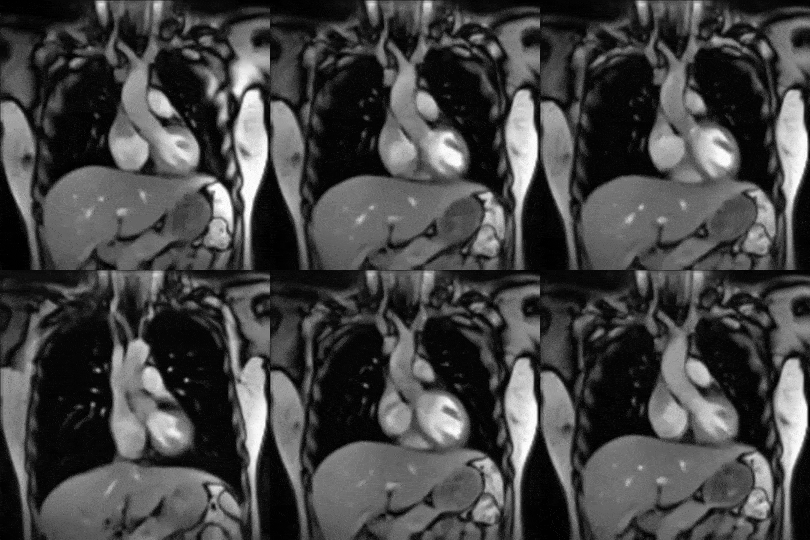
This is my favourite FMRI – a functional, dynamic MRI that shows how breathing moves and affects your viscera. The clip is divided into two breaths. The first a ‘normal’, likely chest breath. The second, a diaphragmatic breath. Note, in the second, the heart. It lengthens and stretches to almost a 1/3 extra of it length, Note the liver. It domes under the diaphragm and, together with the abdominal contents, moves down. Imagine (since you cannot see here), the continuation od the abdominal contents towards the pelvic floor. There is a consequent accordian-like resistance and counter movement of the pelvic floor in relation to tge diaphragm.
And, of course, note the lungs. In ‘scene 1’ there is no real change in dynamics. In scene 2, the lungs seem to expand to over 3x the size. Realise, it is not just the front, up and down but the back of the lungs, the sides of the lungs. All these expand creating space and allowing for movement.
A healthy body breathes well.